
 English
 Español
 Portugues
 Pусский
 Français
 Deutsch
 日本語
日本語 한국어
한국어 العربية
 Italiano
 Svenska
 Polski
 Türk dili
 हिन्दी
 Indonesia
 Melayu
 dansk
dansk Magyar
 қазақ
қазақ বাংলা
বাংলা עִברִית
 čeština
 українська
 беларускі
 Filipino
 Suomalainen
 اردو
اردو հայերեն
 български
 Hrvatski
 galego
 नेपाल
नेपाल euskara
 Shqipëria
 Malagasy
 Башҡорт
 Türkmenler
 Ilocano
 Нохчийн


Reactive Power Compensation
Reactive Power Compensation: An OverviewReactive power compensation is a critical aspect of power system operation and control, ensuring efficient energy transmission, voltage stability, and improved power quality. Unlike active power (measured in watts), which performs useful work, reactive power (measured in volt-amperes reactive, or VAR) is required to maintain electromagnetic fields in inductive loads such as motors, transformers, and transmission lines. While reactive power does not contribute directly to energy consumption, its management is essential for minimizing losses and maintaining system reliability. Importance of Reactive Power Compensation In AC power systems, inductive loads draw reactive power, leading to a phase difference between voltage and current. This results in lower power factor (the ratio of active power to apparent power), increased line losses, and reduced transmission efficiency. Excessive reactive power demand can cause voltage drops, overheating of equipment, and even instability in the grid. Reactive power compensation mitigates these issues by supplying or absorbing reactive power as needed, thereby optimizing power factor and enhancing system performance. Methods of Compensation Several techniques are employed for reactive power compensation: 1. Capacitor Banks – The most common method, where shunt capacitors are connected to the system to offset inductive reactive power. This improves power factor and reduces line losses. 2. Synchronous Condensers – Rotating machines that generate or absorb reactive power dynamically, providing flexible compensation for varying load conditions. 3. Static VAR Compensators (SVCs) – Fast-acting electronic devices using thyristor-controlled reactors and capacitors to provide precise reactive power support, ensuring voltage stability. 4. Static Synchronous Compensators (STATCOMs) – Advanced power electronics-based systems that inject or absorb reactive power instantaneously, offering superior dynamic response compared to SVCs. 5. Distributed Compensation – Deploying smaller compensators (e.g., capacitor banks or STATCOMs) at strategic points in the grid to address localized reactive power imbalances. Benefits of Compensation - Improved Power Factor – Reduces wasted energy and lowers electricity costs. - Enhanced Voltage Regulation – Prevents voltage sags and swells, ensuring stable operation. - Increased Transmission Capacity – Reduces line losses, allowing more active power to be transmitted. - Reduced Equipment Stress – Minimizes overheating and extends the lifespan of transformers and cables. Challenges and Future Trends While reactive power compensation is well-established, integrating renewable energy sources (e.g., wind and solar) introduces new challenges due to their variable nature. Modern solutions involve hybrid compensators, smart inverters, and AI-based control systems to dynamically manage reactive power in real time. In conclusion, reactive power compensation is indispensable for efficient and reliable power system operation. By leveraging both traditional and advanced technologies, utilities can optimize energy delivery, reduce costs, and support the transition to sustainable power grids.
Product
Classificatie:
-
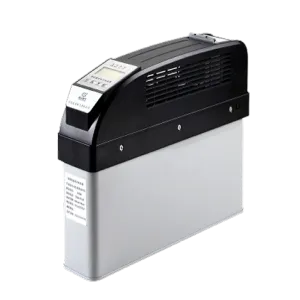
Anti-Harmonic Intelligent Integrated Power Capacitor Compensation Device
Hun classificatie: Power CapacitorBekeken: 39Nummer:Release tijd: 2025-12-18 14:05:15Industry Background and Market Demand Modern industrial and commercial power networks face increasing challenges in reactive power management due to the widespread use of nonlinear loads, including variable frequency drives, rectifiers, welding equipment, and motor drives. These devices introduce reactive currents and harmonics, causing voltage distortion, reduced power factor, and increased losses in transformers and distribution systems. In this context, smart capacitor controllers have emerged as essential tools to optimize reactive power compensation and maintain stable voltage profiles. Unlike traditional fixed or step-switched capacitor banks, smart capacitor controllers offer dynamic, automatic management of reactive power by monitoring real-time network conditions and adjusting compensation accordingly. This capability reduces energy losses, minimizes penalties imposed by utilities for poor power factor, and prolongs the lifespan of connected equipment. Industrial operators increasingly demand solutions that integrate advanced protection, modular expansion, and diagnostic capabilities to enhance operational efficiency while reducing maintenance costs. -
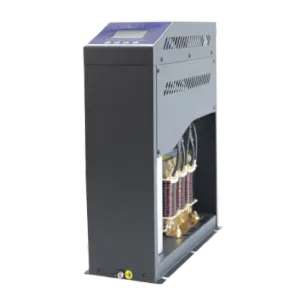
Power Capacitor With Harmonic Suppression
Hun classificatie: Power CapacitorBekeken: 43Nummer:Release tijd: 2025-12-18 14:07:49Industry Background and Market Demand Modern industrial facilities and commercial electrical networks face increasing challenges related to power quality due to the widespread adoption of nonlinear loads such as variable frequency drives, rectifiers, and motor controllers. These devices introduce significant harmonic distortion into the electrical grid, which can deteriorate voltage waveforms, reduce the power factor, and induce unwanted stresses on transformers, cables, and other critical equipment. Traditional reactive power compensation solutions, such as fixed or step-switched capacitor banks, improve power factor but may exacerbate harmonic resonance or overvoltage conditions. As a result, there is growing demand for power capacitors equipped with harmonic suppression capabilities, which not only provide reactive power compensation but also mitigate harmonics, protect connected equipment, and ensure stable voltage regulation. Industrial operators increasingly require solutions that combine reliable reactive power correction, enhanced harmonic control, and fault detection, all in a compact, maintainable form suitable for installation in low-voltage cabinets. -
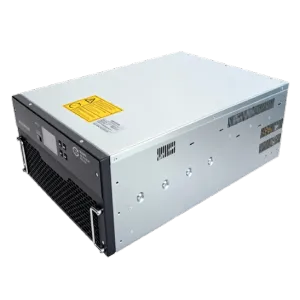
Static Var Generator
Hun classificatie: SVGBekeken: 41Nummer:Release tijd: 2025-12-18 14:18:34Industry Background and Market Demand In industrial power systems, reactive power management is a critical aspect of maintaining electrical efficiency, voltage stability, and overall power quality. As modern facilities increasingly employ nonlinear loads such as variable frequency drives, rectifiers, and motor drives, the demand for dynamic and accurate reactive power compensation has grown significantly. Poor power factor and excessive reactive current not only reduce system efficiency but also increase stress on transformers, conductors, and protective devices, often leading to higher operational costs and reduced equipment lifespan. A Static Var Generator (SVG), sometimes referred to as a static reactive power generator, is an advanced power electronics solution that provides fast, continuous, and stepless reactive power compensation to address these challenges. Traditional methods such as fixed capacitor banks or mechanical switched capacitors have limitations in response speed and adaptability under dynamic load conditions. SVGs have emerged as an effective technology to dynamically balance reactive power, stabilize voltage, and improve power factor in complex electrical networks.
Nieuws
Classificatie:
Geen zoekresultaten!
Geval
Classificatie:
Geen zoekresultaten!
Video
Classificatie:
Geen zoekresultaten!
Download
Classificatie:
Geen zoekresultaten!
Werving
Classificatie:
Geen zoekresultaten!
Aanbevolen producten
-
NEWS
Power Capacitor With Harmonic Suppression
Meer informatie -
NEWS
Static Var Generator
Meer informatie



 WhatsApp
 Telefoon